Wednesday, May 6, 2026

Non-Traded REITs: Reported (Statement) Values vs. Real Market Prices Which Indicates What You Can Sell It For and Cash Out

Non-Traded REITs: Reported Values (as seen on a Statement)vs. Real Market Prices (what an investor's investment Will Sell For).
For years, many investors in non-traded REITs and private real estate investments believed their accounts were stable because the “stated value” on account statements appeared steady.

But when investors attempt to sell these products on the secondary market, they often discover a very different reality.

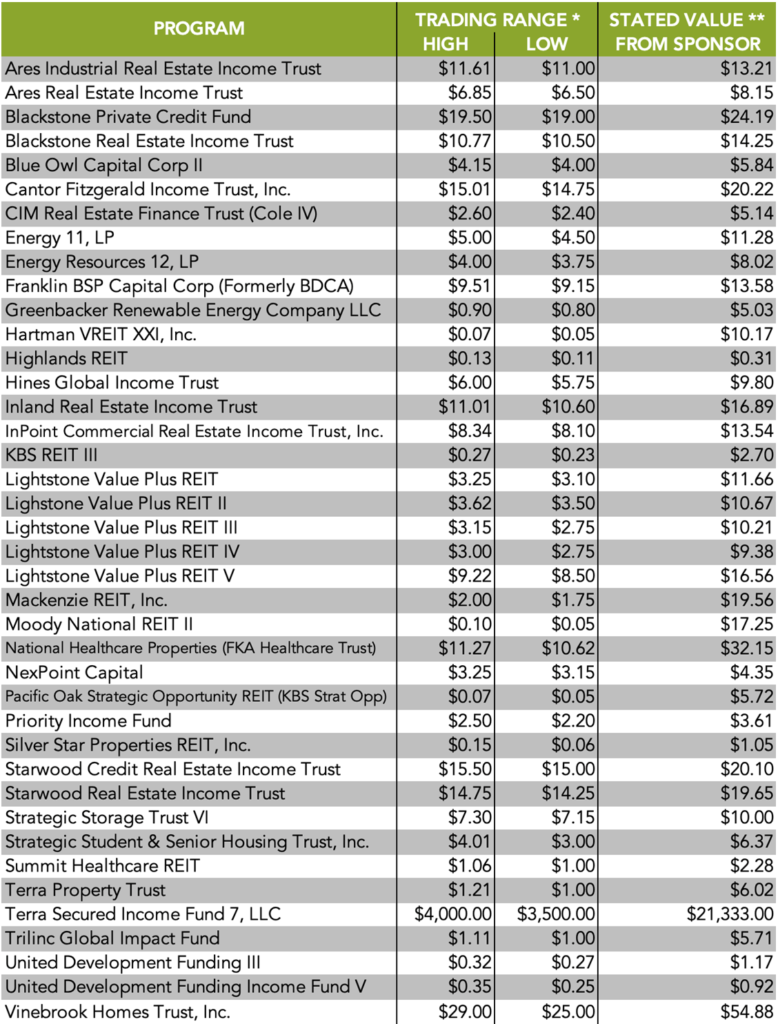
Secondary market trading prices for many non-traded REITs have traded at substantial discounts to the values reported by sponsors. In some cases, investments with reported values near $10 per share have traded for only a fraction of that amount.

This discrepancy can become critically important for retirees and conservative investors who were told these products were appropriate for income, safety, or preservation of principal.

“stated value” reported by the sponsor often bears little resemblance to what the investment actually trades for in the secondary market. The chart represents actual offering prices courtesy of Central Trade and Transfer who provide a very limited secondary market for those investors that need to sell their REIT shares.

It is true that a picture is worth a thousand words, this picture shows red flags for:

  • unsuitable investment claims,

  • damages discussions,

  • failure-to-supervise cases,

  • and elder investor exploitation narratives.

Some examples:

  • Lightstone products with sponsor values near $10–$16 trading near $3

  • KBS REIT III trading around pennies versus stated values many multiples higher

  • Hartman VREIT XXI showing near-wipeout pricing

  • VineBrook Homes showing large discounts between sponsor value and trading range

  • energy LPs trading far below sponsor valuations

This is exactly the kind of content investors search after discovering they cannot liquidate an investment near the value shown on account statements.

That distinction is important legally and psychologically.

One may say:

“My statements showed I still had $300,000.”

But when liquidation is attempted:

the actual market may only support $90,000–$150,000.

That disconnect is often the emotional turning point that causes investors to contact counsel.

  • “Why Non-Traded REIT Account Statements May Be Misleading”

  • “The Difference Between Sponsor Value and Actual Market Value”

  • “Non-Traded REIT Secondary Market Prices vs. Statement Values”

  • “Illiquid REITs: What Investors Discover When They Try to Sell”


from Mazer Law Firm PC https://mazerlawfirmpc.com/non-traded-reits-reported-statement-values-vs-real-market-prices-which-indicates-what-you-can-sell-it-for-and-cash-out/

Monday, March 30, 2026

Alabama Securities Commission Order Against Raymond James – Investors May Have Been Charged Excessive Commissions
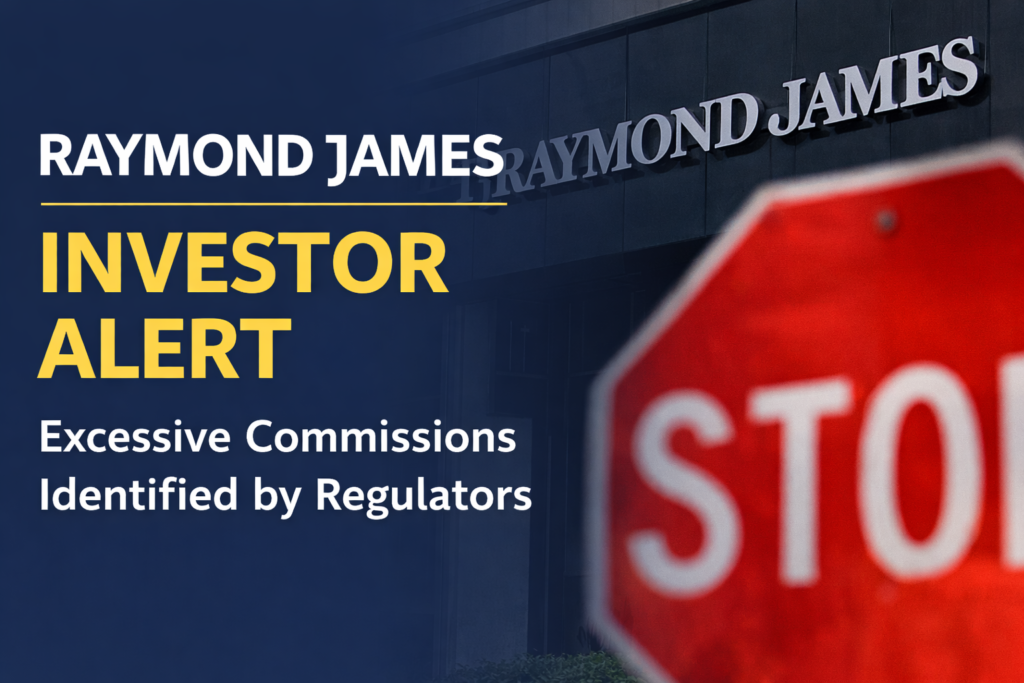
🚨 ALABAMA INVESTOR ALERT:Alabama Securities Commission Order Against Raymond James – Investors May Have Been Charged Excessive Commissions

A recent Alabama Securities Commission enforcement action found that Raymond James charged excessive and unreasonable commissions on thousands of transactions, potentially harming retail investors.

he Alabama Securities Commission has issued an administrative order against Raymond James & Associates, Inc. and Raymond James Financial Services, Inc. involving widespread commission practices affecting investors nationwide.

According to the order, regulators found that Raymond James charged unreasonable commissions on more than 270,000 transactions, totaling over $8.25 million in excessive charges.

If you were a Raymond James client, you may have paid far more in fees than you realized.


🚨 WHAT THE ORDER FOUND

The ASC investigation uncovered serious issues, including:

  • Excessive commissions on low-value stock trades
  • Charges exceeding 5% of the principal investment in many transactions
  • In some cases, commissions exceeded 90% of the value of the trade
  • A default $75 minimum commission applied even to very small transactions

The result: investors—especially those making smaller trades—were disproportionately impacted.


📉 HOW INVESTORS WERE AFFECTED

According to the order:

  • Over 270,000 transactions nationwide involved excessive commissions
  • In Alabama alone, more than 7,200 transactions involved unreasonable charges
  • Alabama investors were charged over $200,000 in excessive commissions

These were not isolated incidents—they were systemic.


⚠ THE REAL PROBLEM: SYSTEMIC FAILURES

The order didn’t just identify excessive fees—it identified firm-wide failures:

1. Default Commission System

Raymond James systems automatically applied a minimum $75 commission, even when:

  • The trade value was extremely small
  • Lower-cost alternatives were available

2. Lack of Supervision

The firm:

  • Failed to monitor low-value trades properly
  • Did not use effective exception reports
  • Missed transactions where commissions exceeded reasonable levels

3. Prior Regulatory History

This was not the first time.

Regulators noted Raymond James had previously paid over $1.7 million in restitution for similar conduct—but failed to fix the issue.


⚖ WHAT THE ORDER REQUIRES

As part of the settlement, Raymond James agreed to:

  • Pay at least $8.25 million in restitution plus interest to affected investors
  • Pay millions in fines and penalties across multiple states
  • Pay $235,064.52 specifically to Alabama investors
  • Implement compliance changes to prevent excessive commissions

🔍 WHAT THIS MEANS FOR INVESTORS

A regulatory order is important—but it does not fully compensate investors.

Even when restitution is paid:

  • It may not cover all losses
  • It may not include consequential damages
  • It does not address broader portfolio harm

🚨 YOU MAY HAVE A CLAIM IF

You may have a claim against Raymond James if:

  • You paid high or unexpected trading commissions
  • You made frequent small trades that generated fees
  • Your account showed repeated $75 commissions
  • You were unaware of how fees were calculated
  • Your portfolio underperformed due to excessive costs

⚖ HOW RECOVERY WORKS

Most claims against firms like Raymond James are handled through FINRA arbitration.

This process allows investors to recover losses caused by:

  • Excessive commissions
  • Unsuitable trading activity
  • Failure to supervise

💬 CALL TO ACTION

Free Case Evaluation – No Fee Unless You Recover

If you were a Raymond James client and believe you were charged excessive commissions, we can review your account and determine whether you have a claim.

📞 Call: (205) 644-3744
📩 Submit a consultation request online



from Mazer Law Firm PC https://mazerlawfirmpc.com/alabama-securities-commission-order-against-raymond-james-investors-may-have-been-charged-excessive-commissions/

Monday, March 16, 2026

Edward Jones Customers in Alabama: Were You Charged Excessive Commissions?

Edward Jones Customers in Alabama: Were You Charged Excessive Commissions?

The Alabama Securities Commission recently entered a regulatory order involving Edward Jones after determining that certain equity transactions executed for Alabama investors involved unreasonable commissions exceeding 5% of the principal trade amount.

According to the order, more than 10,000 transactions affecting Alabama investors were reviewed, and the firm was required to provide restitution plus interest to affected customers.

If you maintained an Edward Jones investment account in Alabama, you may want an independent review of your account statements and trade confirmations to determine whether excessive commissions or other brokerage misconduct affected your account.

Mazer Law Firm P.C. represents investors in FINRA arbitration and securities fraud cases nationwide and provides free case reviews for investors who suspect broker misconduct.

What the Alabama Securities Commission Found

Regulators concluded that certain Edward Jones equity transactions involved commissions that exceeded regulatory guidelines, triggering restitution requirements.

The order states that:

• More than 10,000 Alabama transactions involved excessive commissions
• Commissions exceeded 5% of the principal value of the trade
• Affected customers were entitled to restitution plus interest
• The conduct reviewed occurred between May 2020 and April 2025

While regulatory restitution may compensate investors for certain fees, it does not always resolve all legal issues related to broker conduct or account management.

Why an Independent Review of Your Account May Be Important

Even when a brokerage firm pays regulatory restitution, investors may still have questions about:

• Whether commissions were excessive beyond those identified by regulators
• Whether investment recommendations were suitable
• Whether trading activity was in the investor’s best interest
• Whether additional losses occurred because of broker misconduct
• Whether supervision failures occurred at the firm

In many cases, investors do not realize how significant fees and commissions can be until an attorney reviews their account statements and trade confirmations.

Warning Signs of Possible Broker Misconduct

You may want to have your Edward Jones account reviewed if you experienced:

• Frequent small stock trades with high commissions
• Fees that were not clearly explained by your advisor
• Trades executed without clear discussion of costs
• Unexplained reductions in account value
• Investment recommendations that did not match your financial goals

Investors often assume high fees are simply part of investing, when in reality brokerage rules limit what firms can charge.

What Documents Should Investors Gather?

If you believe your account may have been affected, gathering the following documents can help evaluate your situation:

• Monthly account statements
• Trade confirmations
• Any restitution notices or letters from Edward Jones
• Emails or communications with your financial advisor
• Account opening documents or investment objectives

These records allow an attorney to determine whether excessive commissions, unsuitable recommendations, or other misconduct occurred.

Free Investment Account Review

Mazer Law Firm P.C. represents investors harmed by broker misconduct, excessive commissions, unsuitable investments, and securities fraud.

If you had an Edward Jones account in Alabama and want to understand your legal options, we offer a free consultation and account review.

Call (205) 644-3744 or request a consultation online.

There is no fee unless we recover money for you.

FAQ SECTION

FAQ: Edward Jones Excessive Commissions

What are excessive commissions in an investment account?

Excessive commissions occur when a brokerage firm charges fees that exceed reasonable industry standards for executing trades. Regulators generally consider commissions above certain thresholds—often around 5% of the transaction amount—to be potentially excessive depending on the circumstances.


If a brokerage firm pays regulatory restitution, can investors still pursue claims?

In some situations, yes. Regulatory restitution may compensate investors for certain fees identified by regulators, but it does not necessarily address all potential damages that may arise from broker misconduct or unsuitable recommendations.


How do I know if my broker charged excessive commissions?

The most reliable way is to review trade confirmations and account statements to calculate the percentage commission relative to each trade. An experienced securities attorney can perform this analysis and determine whether regulatory limits were exceeded.


What legal options do investors have if their broker charged excessive fees?

Most disputes between investors and brokerage firms are resolved through FINRA arbitration, which allows investors to pursue claims for damages resulting from broker misconduct, excessive commissions, or unsuitable investment recommendations.


from Mazer Law Firm PC https://mazerlawfirmpc.com/edward-jones-customers-in-alabama-were-you-charged-excessive-commissions/

Thursday, February 26, 2026

Efficient Investing: How To Compound Wealth — And Protect It — Over A Lifetime

Financial freedom is not about hoarding wealth.

It is about building it intelligently — and protecting it from unnecessary erosion.

Efficient investing is the discipline that turns savings into lifetime independence.

But efficiency is not automatic.

It requires structure, transparency, and oversight.


The Mathematics Of Compounding (And Why Small Mistakes Matter)

Compounding is powerful.

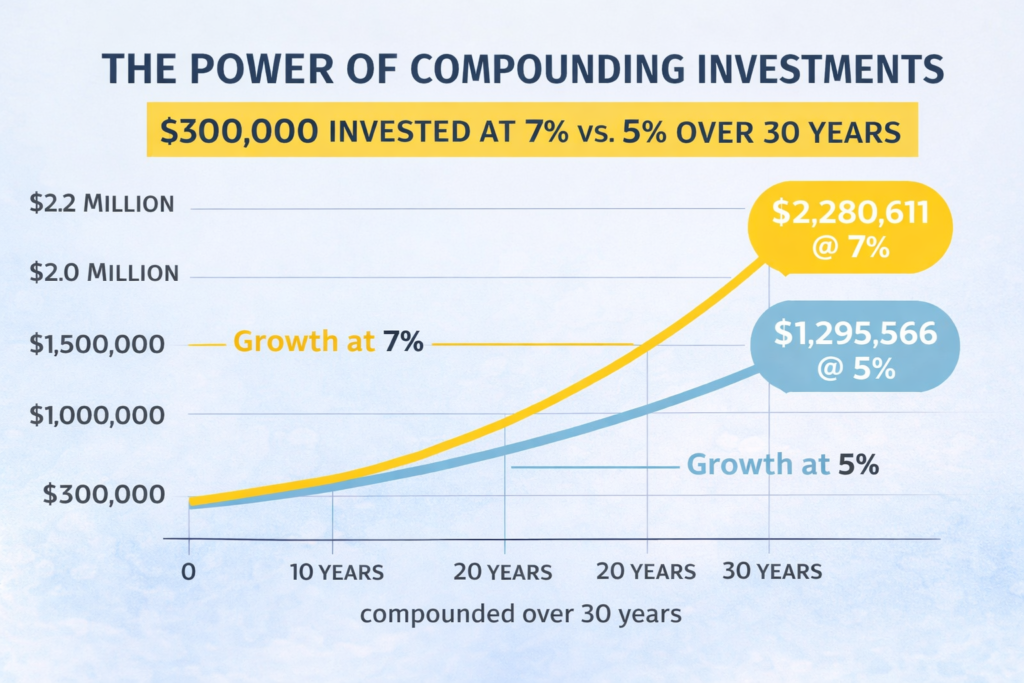
A $300,000 portfolio earning 7% annually grows to approximately $2.2 million in 30 years.

At 5%, that same portfolio grows to roughly $1.3 million.

That 2% difference may come from:

  • Excessive fees
  • High-expense funds
  • Commission-driven products
  • Overconcentration
  • Illiquid alternative investments
  • Poor allocation

Over decades, small inefficiencies compound into massive lost opportunity.

The difference is not theoretical.

It is life-changing.

A $300,000 investment earning 7% annually grows to over $2.28 million in 30 years, while the same portfolio earning 5% reaches approximately $1.29 million — illustrating how small differences in return compound dramatically over time.

Assumes annual compounding, no additional contributions, no withdrawals, no taxes.


Efficient Investing Requires:

  • Proper asset allocation
  • Risk aligned with your age and goals
  • Transparent fee structure
  • Diversification
  • Tax coordination
  • Periodic review

Every investor should understand:

What do I own?
Why do I own it?
How much am I paying?
What are the risks?

If those answers are unclear, efficiency may already be compromised.


The Silent Wealth Killers

Most investors do not lose wealth in dramatic collapses.

They lose it gradually through:

  • Excessive advisory fees
  • Unsuitable annuities
  • Non-traded REITs
  • Concentrated positions
  • Churning
  • Failure to rebalance
  • Commission incentives

Underperformance compounds.

So do conflicts.


Growth Phase Vs. Protection Phase

Efficient investing evolves.

In your 30s and 40s:
Growth dominates.

In your 50s:
Balance matters.

In retirement:
Preservation and controlled distribution become critical.

A static strategy across decades is rarely efficient.


Trust Is Important. Verification Is Essential.

Many investors assume:

“If my account went up, everything must be fine.”

Not necessarily.

Material underperformance, excessive fees, unsuitable risk exposure, or undisclosed conflicts may exist even in a positive-return year.

You deserve transparency.

You deserve alignment.

You deserve a strategy built for you — not for someone else’s commission structure.


When Efficiency Breaks Down

If you suspect:

  • Your portfolio significantly underperformed benchmarks
  • You were placed into complex or illiquid products
  • You were not fully informed about risk
  • Your advisor’s compensation was unclear
  • Your retirement timeline was ignored

It may not simply be inefficiency.

It may be misconduct.

And that distinction matters.


The Difference Between Efficient Investing And Investment Fraud

Efficient investing builds wealth.

Fraud, misconduct, and conflicts quietly erode it.

If you are unsure whether your portfolio inefficiency is simply poor strategy — or something more serious — it is worth a careful review.

Schedule a Confidential Portfolio Review


Speak With An Investment Fraud Attorney

If you believe your portfolio suffered from:

  • Unsuitable recommendations
  • Overconcentration
  • Hidden conflicts
  • Excessive fees
  • Misrepresentation

You may have options.

A disciplined review of your account documents can often reveal what went wrong.

Financial freedom should not be undermined by misconduct.


Frequently Asked Questions

How Much Do Fees Impact Long-Term Wealth?

Even a 1% annual fee difference can reduce long-term portfolio value by hundreds of thousands over 25–30 years.

Fees compound negatively.


What Is A Suitable Investment?

A suitable investment aligns with your age, risk tolerance, objectives, liquidity needs, and financial profile.

Anything misaligned may create legal exposure for the recommending advisor.


Can You Recover Losses Caused By Unsuitable Investments?

In some cases, yes.

Investors may have claims through FINRA arbitration or litigation depending on the circumstances.

Each case requires careful analysis.


How Often Should A Portfolio Be Reviewed?

At minimum annually — and whenever there is a life event such as retirement, inheritance, divorce, or major market change.

CONTACT US


from Mazer Law Firm PC https://mazerlawfirmpc.com/efficient-investing-how-to-compound-wealth-and-protect-it-over-a-lifetime-2/

Efficient Investing: How to Compound Wealth — and Protect It — Over a Lifetime

Financial freedom is not about hoarding wealth.

It is about building it intelligently — and protecting it from unnecessary erosion.

Efficient investing is the discipline that turns savings into lifetime independence.

But efficiency is not automatic.

It requires structure, transparency, and oversight.


The Mathematics of Compounding (And Why Small Mistakes Matter)

Compounding is powerful.

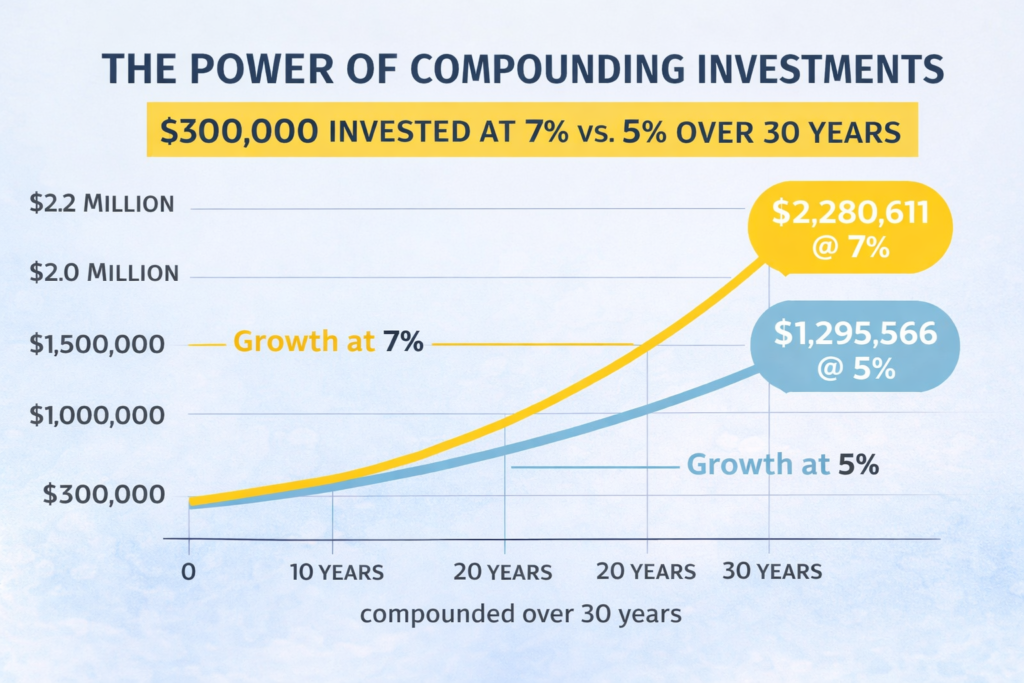
A $300,000 portfolio earning 7% annually grows to approximately $2.2 million in 30 years.

At 5%, that same portfolio grows to roughly $1.3 million.

That 2% difference may come from:

  • Excessive fees
  • High-expense funds
  • Commission-driven products
  • Overconcentration
  • Illiquid alternative investments
  • Poor allocation

Over decades, small inefficiencies compound into massive lost opportunity.

The difference is not theoretical.

It is life-changing.

A $300,000 investment earning 7% annually grows to over $2.28 million in 30 years, while the same portfolio earning 5% reaches approximately $1.29 million — illustrating how small differences in return compound dramatically over time.

Assumes annual compounding, no additional contributions, no withdrawals, no taxes.


Efficient Investing Requires:

  • Proper asset allocation
  • Risk aligned with your age and goals
  • Transparent fee structure
  • Diversification
  • Tax coordination
  • Periodic review

Every investor should understand:

What do I own?
Why do I own it?
How much am I paying?
What are the risks?

If those answers are unclear, efficiency may already be compromised.


The Silent Wealth Killers

Most investors do not lose wealth in dramatic collapses.

They lose it gradually through:

  • Excessive advisory fees
  • Unsuitable annuities
  • Non-traded REITs
  • Concentrated positions
  • Churning
  • Failure to rebalance
  • Commission incentives

Underperformance compounds.

So do conflicts.


Growth Phase vs. Protection Phase

Efficient investing evolves.

In your 30s and 40s:
Growth dominates.

In your 50s:
Balance matters.

In retirement:
Preservation and controlled distribution become critical.

A static strategy across decades is rarely efficient.


Trust Is Important. Verification Is Essential.

Many investors assume:

“If my account went up, everything must be fine.”

Not necessarily.

Material underperformance, excessive fees, unsuitable risk exposure, or undisclosed conflicts may exist even in a positive-return year.

You deserve transparency.

You deserve alignment.

You deserve a strategy built for you — not for someone else’s commission structure.


When Efficiency Breaks Down

If you suspect:

  • Your portfolio significantly underperformed benchmarks
  • You were placed into complex or illiquid products
  • You were not fully informed about risk
  • Your advisor’s compensation was unclear
  • Your retirement timeline was ignored

It may not simply be inefficiency.

It may be misconduct.

And that distinction matters.


The Difference Between Efficient Investing and Investment Fraud

Efficient investing builds wealth.

Fraud, misconduct, and conflicts quietly erode it.

If you are unsure whether your portfolio inefficiency is simply poor strategy — or something more serious — it is worth a careful review.


Speak With an Investment Fraud Attorney

If you believe your portfolio suffered from:

  • Unsuitable recommendations
  • Overconcentration
  • Hidden conflicts
  • Excessive fees
  • Misrepresentation

You may have options.

A disciplined review of your account documents can often reveal what went wrong.

Financial freedom should not be undermined by misconduct.


Frequently Asked Questions

How much do fees impact long-term wealth?

Even a 1% annual fee difference can reduce long-term portfolio value by hundreds of thousands over 25–30 years.

Fees compound negatively.


What is a suitable investment?

A suitable investment aligns with your age, risk tolerance, objectives, liquidity needs, and financial profile.

Anything misaligned may create legal exposure for the recommending advisor.


Can you recover losses caused by unsuitable investments?

In some cases, yes.

Investors may have claims through FINRA arbitration or litigation depending on the circumstances.

Each case requires careful analysis.


How often should a portfolio be reviewed?

At minimum annually — and whenever there is a life event such as retirement, inheritance, divorce, or major market change.


from Mazer Law Firm PC https://mazerlawfirmpc.com/efficient-investing-how-to-compound-wealth-and-protect-it-over-a-lifetime/

Friday, February 20, 2026

Annuity Fraud Lawyer: When Barred Brokers Reinvent Themselves as Insurance “Advisors”

If you are searching for an annuity fraud lawyer, you may already suspect something is wrong.

Many cases of insurance investment fraud begin the same way:

A broker loses — or surrenders — a securities license.
Shortly afterward, that same individual begins selling annuities or insurance products.

The title changes.
The business card changes.
The regulatory oversight changes.

The sales tactics often do not.


From FINRA Discipline to Insurance Sales

When a registered representative is barred by the Financial Industry Regulatory Authority (FINRA), they can no longer sell securities.

However, many pivot into the insurance industry, regulated by state insurance departments rather than FINRA or the SEC.

They may begin selling:

  • Fixed indexed annuities
  • Variable annuities
  • Whole life or universal life insurance
  • Equity-indexed life products

Insurance products are not inherently improper. But in many annuity fraud cases, they are used as substitutes for prior securities misconduct.


How Insurance Investment Fraud Happens

Insurance investment fraud often targets retirees who:

  • Roll over 401(k) or IRA assets
  • Are concerned about market volatility
  • Want “safe” retirement income

Common red flags include:

✔ Recommending that most or all retirement savings be placed into one annuity

✔ Emphasizing “no market risk” while ignoring opportunity cost
✔ Failing to disclose 7–15 year surrender periods
✔ Minimizing liquidity restrictions
✔ Downplaying commission incentives
✔ Failing to compare alternatives

In many cases, the investor technically “made money.”

That does not end the legal analysis.


“You Made Money” Is Not a Defense in Annuity Fraud Cases

A modest gain does not excuse:

  • Unsuitable recommendations
  • Excessive concentration
  • Failure to disclose surrender charges
  • Misrepresentation of risk
  • Failure to supervise
  • Elder financial exploitation

Insurance investment fraud cases focus on suitability, disclosure, and conflicts of interest — not simply whether the account increased in value.


Fixed Indexed Annuity Fraud and Retirement Rollovers

One of the most common scenarios involves:

  1. Encouraging a retiree to roll over a 401(k)
  2. Recommending a large fixed indexed annuity
  3. Locking funds into long surrender schedules
  4. Collecting high upfront commissions

Years later, when liquidity is needed, surrender penalties surface.

That is when many investors begin searching for an annuity fraud attorney.


Can You Sue Over an Insurance Annuity?

Yes — depending on the facts.

Potential legal claims in insurance investment fraud cases may include:

  • Unsuitable recommendation
  • Fraud or misrepresentation
  • Omission of material facts
  • Negligence
  • Breach of fiduciary duty (in certain contexts)
  • Elder financial exploitation
  • Failure to supervise (agency or institutional liability)

Liability may extend beyond the individual agent to:

  • Insurance agencies
  • Marketing organizations (IMOs)
  • Bank-affiliated platforms
  • Supervising entities

Bank-Based Annuity Sales: A Hidden Risk

Many annuity fraud cases arise inside bank branches, where consumers assume heightened oversight.

The bank environment creates a “halo effect” of safety.

But when insurance-only products are sold through loosely supervised channels, the structure can create exposure for:

  • Apparent authority
  • Negligent supervision
  • Institutional liability

Warning Signs You May Need an Annuity Fraud Lawyer

You may have a claim if:

  • Your advisor previously held a securities license and no longer does
  • Most of your retirement savings were moved into one annuity
  • You were not clearly informed about surrender penalties
  • Liquidity needs were ignored
  • The product was described as “safe” without full explanation
  • You discovered undisclosed commissions

Insurance Investment Fraud Often Targets Seniors

Insurance investment fraud disproportionately impacts retirees.

Many cases involve:

  • Age 65+ investors
  • Large IRA rollovers
  • Long-term surrender periods
  • Limited financial sophistication
  • Trust-based relationships

These facts may strengthen certain statutory or common law claims.


What To Do If You Suspect Annuity Fraud

If you suspect unsuitable annuity recommendations or insurance investment fraud:

  1. Gather all annuity contracts
  2. Obtain rollover paperwork
  3. Request commission disclosures
  4. Review surrender schedules
  5. Check regulatory history through FINRA and state databases
  6. Seek legal review promptly

Time limits may apply.


Frequently Asked Questions About Annuity Fraud

What is annuity fraud?

Annuity fraud typically involves misrepresentation, omission, or unsuitable recommendations involving annuity products — especially when large portions of retirement savings are concentrated in high-commission contracts.

Is a fixed indexed annuity a security?

Some are insurance products, some are securities. The regulatory classification does not eliminate potential liability for misconduct.

Can I recover surrender charges?

In some cases, yes — particularly if the annuity was unsuitable or materially misrepresented.

How do I know if I need an annuity fraud lawyer?

If you were encouraged to roll over retirement funds into a long-term annuity without full disclosure of liquidity restrictions and risks, legal review is advisable.


Annuity Fraud Lawyer Representing Investors Nationwide

Glenn I. Mazer represents investors in cases involving:

  • Annuity fraud
  • Insurance investment fraud
  • Retirement rollover misconduct
  • Broker and agent supervision failures

If you believe you were sold an unsuitable annuity or misled about retirement risk, legal analysis may help determine your options.

Turning Financial Betrayal Into Justice


from Mazer Law Firm PC https://mazerlawfirmpc.com/annuity-fraud-lawyer-when-barred-brokers-reinvent-themselves-as-insurance-advisors/

Thursday, February 19, 2026

When a “Gain” Still Signals Investment Fraud or Unsuitable Advice

When a Gain Still Signals a Legal Problem

At first glance, a 5% gain for the year may appear acceptable.

But investment performance cannot be evaluated in isolation.

When the broader market — such as the S&P 500 — generated a 17.9% return during the same time period, the issue is no longer simply whether the account gained value. The issue becomes whether the account materially underperformed an appropriate benchmark.

✔ There Was a Gain

Yes. The account increased in value.

✔ But It Materially Underperformed the Benchmark

A 5% return compared to a 17.9% market return represents a significant performance gap. Over time, that gap compounds and can result in substantial lost opportunity.

✔ Underperformance May Support Legal Claims

Material underperformance can support claims involving:

  • Unsuitable investment strategy
  • Excessive concentration in certain products
  • Overly conservative or overly aggressive allocation
  • Failure to follow stated investment objectives
  • High-fee or commission-driven product selection
  • Negligent portfolio management

In many cases, investors are told:

“You made money. There’s no problem.”

But that statement ignores benchmark comparison, asset allocation standards, and risk-adjusted performance analysis.

A properly constructed portfolio aligned with an investor’s objectives should reasonably track — or be intentionally positioned relative to — appropriate market benchmarks. When there is a substantial divergence without justification, it raises serious questions about:

  • Strategy design
  • Product selection
  • Fee structure
  • Disclosure adequacy
  • Supervisory oversight

The Legal Importance of Comparative Performance

Investment fraud and broker misconduct claims are not limited to situations involving outright losses.

Sometimes the issue is not that the account declined — but that it failed to perform as it reasonably should have under prevailing market conditions.

That distinction is how many investors are misled.

“You made money” can obscure:

  • Missed market gains
  • Misaligned risk exposure
  • Commission-driven decision-making
  • Hidden product limitations

Comparative performance analysis is often a key component of evaluating suitability and breach of duty.


Turning Financial Betrayal Into Justice

If your account gained modestly while the market significantly outperformed, it may be worth a professional review.

Even gains can mask misconduct.

Free Consultation
We don’t get paid unless you win.


from Mazer Law Firm PC https://mazerlawfirmpc.com/when-a-gain-still-signals-investment-fraud-or-unsuitable-advice/